Cart
0

If you've ever stood in a Singapore supermarket aisle staring at ten different "extra virgin olive oil" bottles, all claiming to be the real deal, you're not alone. Olive oil is one of the foods most often targeted by fraud, and because Singapore imports all of it, shoppers here are especially exposed to oils that have been relabelled, diluted with other oils or mislabelled, and that never go through a local quality check.
The good news: you don't need a lab to protect yourself. A few buying habits, label details and sensory cues will tell you almost everything you need to know, most of it before you even open the bottle.
Why Is Fake Olive Oil a Real Problem in Singapore?
Singapore has no olive groves, so every bottle on the shelves is imported, often through several middlemen before it reaches a store. Every extra step between the mill and your kitchen creates more opportunities for:
- Blending: extra virgin oil cut with cheaper refined olive oil or seed oils.
- Mislabelling: ordinary "olive oil" or "pomace oil" sold under an "extra virgin" label.
- Origin fraud: oil from one country relabelled as coming from a more prestigious one, like Italy or Greece.
- Age fraud: old, oxidised oil dressed up with fresh-looking dates on the label.
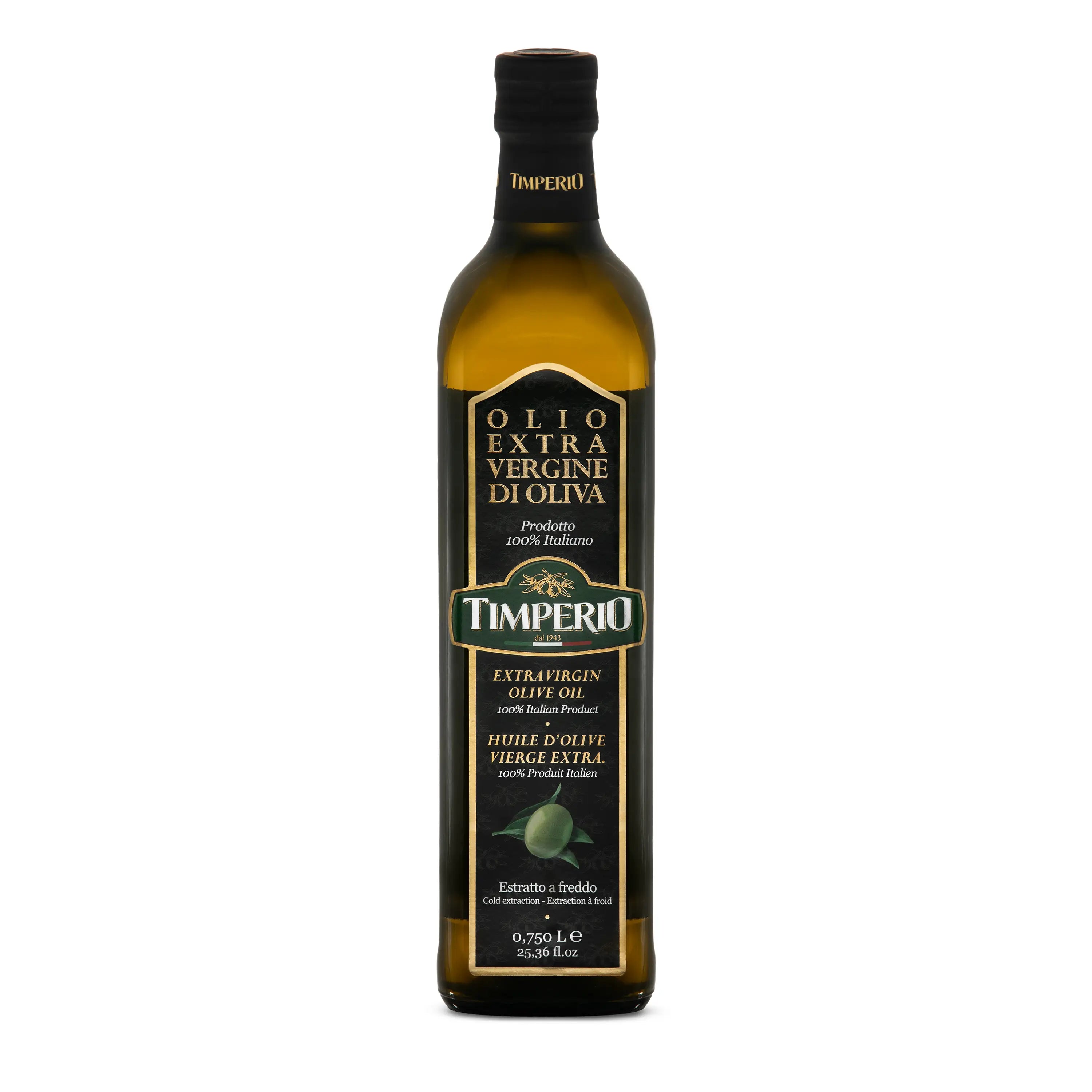
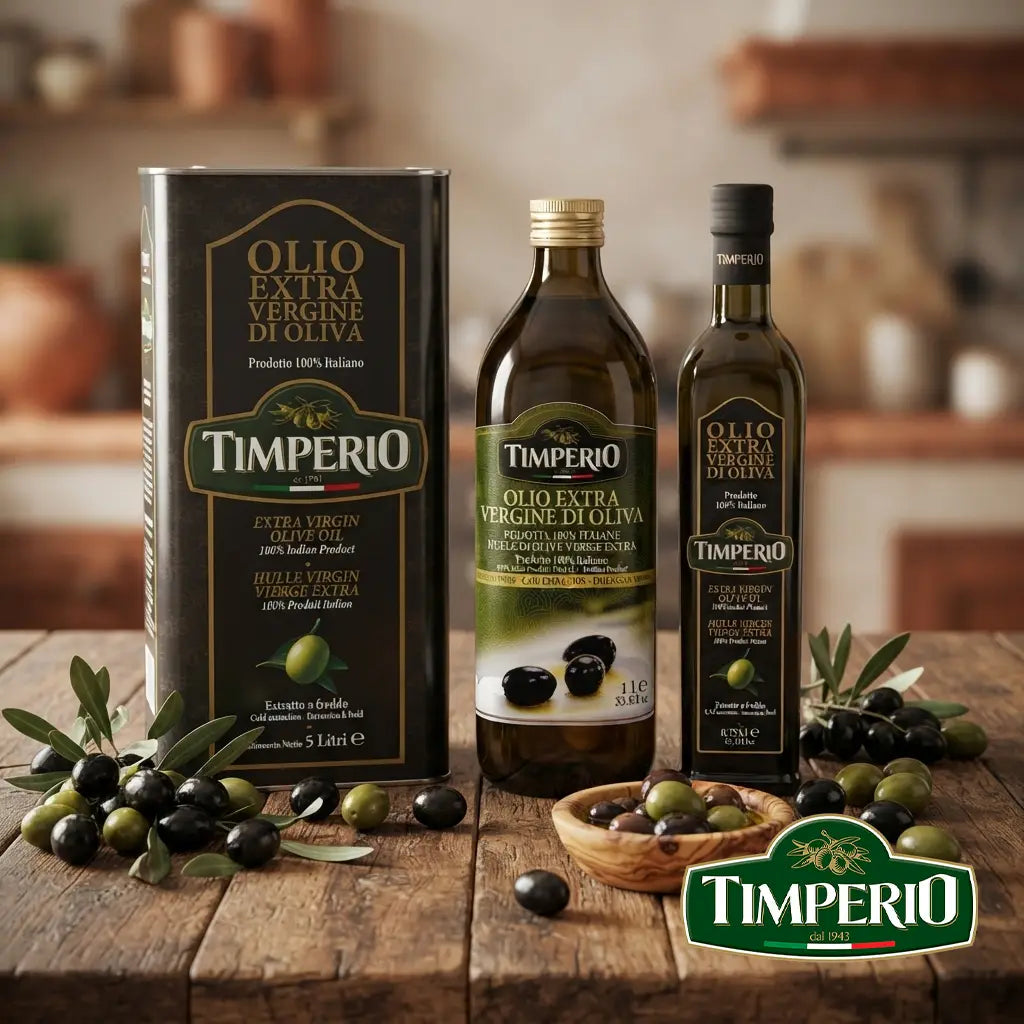
None of this is unique to Singapore, but because we don't have the olive oil culture of Mediterranean countries, lower-grade oil can easily pass unnoticed. That's exactly why every bottle we sell, from the Timperio Nobile 5-litre tin to the Timperio Gentile 1-litre bottle and the Organic Bio/Olio EVOO, is built to pass every check below.
Read also: Why Buying Authentic Italian Olive Oil in Singapore Is So Confusing
The Singapore Buyer's Checklist
1. Check the Bottle, Not Just the Label
Light and heat are two of olive oil's three great enemies (the third is oxygen), and Singapore has plenty of both. Genuine producers know this and package accordingly.
Look for:
- Dark glass (green, brown or opaque), never clear glass or clear plastic.
- An intact seal on the cap, so you know the bottle has never been opened.
- Tins, which block light completely and suit our climate well.
If you see extra virgin olive oil in a clear bottle under fluorescent supermarket lighting, that's already a red flag: the oil has probably started to degrade before it even reaches your basket. That's why our Timperio Nobile 5-litre tin comes in light-blocking tin rather than glass, and the Timperio Gentile 1-litre bottle uses dark glass for the same reason.
2. Judge Freshness by Where It Comes From, Not by the Dates on the Bottle
Freshness is what every shopper wants to judge, and the dates printed on a bottle tell you less than you'd think. A "best before" date is usually set around two years after bottling, so it says nothing about how long the oil has already spent in transit and in a distributor's warehouse. The better questions are where the oil comes from and how fast you'll use it.
What to look for:
- Buy direct from the producer. The shorter the chain, the fresher the oil. Ours starts at our family mill in Colletorto, Molise, where olives are milled within 12 hours of picking and the oil settles in stainless steel vats. We bottle it ourselves and ship it to our own Singapore warehouse, with no importer or distributor in between.
- Published lab results. A serious producer tests every harvest and publishes the results, saying what was measured and when. You'll find ours in our Harvest Report: for the 2025 harvest, free acidity of 0.18–0.2%, and about 600 mg/kg of total polyphenols in our Nobile, tested in November 2025. Polyphenols fall naturally month by month, so a bottle opened today will measure less. That's why we always give the date.
- Dark glass or tin, as in point 1.
- A size you'll finish within 2–3 months of opening. Once a bottle is open, oxygen gets to work, and Singapore's heat speeds it up. A 500 ml or 1-litre bottle suits most households; the 5-litre tin makes sense if your family cooks with olive oil every day. Keep it closed, cool and away from the stove, and, as many of our customers do, decant your everyday oil into a small dark bottle.
For reference, our Nobile is an early-harvest oil from semi-ripe olives picked at the start of the season, while Gentile is a late-harvest oil from fully ripe olives picked later on. In Molise, our harvest runs from late October into December. For more on keeping oil fresh at home, see our guide to storing olive oil in Singapore's tropical climate.
3. Look for Real Certifications, and Know What They Prove
Certifications aren't foolproof, and plenty of excellent oils from small family producers carry no origin seal at all, so treat a seal as a bonus rather than a requirement.
Genuine indicators include:
- PDO (Protected Designation of Origin) or PGI (Protected Geographical Indication) seals, such as Italian DOP or IGP.
- Organic certification with a named certifying body, not just the word "organic" on the label.
- Lab results the producer publishes, as in point 2.
Our Organic Bio/Olio EVOO is EU organic certified, verified by Suolo e Salute in Italy, meaning the olives are grown without synthetic pesticides or fertilisers. That's the level of specificity a genuine certification should give you. And the small Molise farmers who bring us their olives keep part of every harvest for their own families, which is one more reason chemicals stay out of their groves.
4. Check the Acidity Level
By law, extra virgin olive oil must have free acidity of 0.8% or less, and premium oils usually sit around 0.2–0.4%. Genuine producers are happy to share this figure, on the label, the product page or in their lab results; fake or diluted oils tend to keep quiet about it.
Checklist:
- Acidity stated as 0.8% or less.
- No acidity figure anywhere (label, website or lab report) = treat with caution.
- Compare bottles: if one is far cheaper and gives no acidity figure, it's very likely not true extra virgin.
As a benchmark, our Timperio Nobile 5-litre tin measures 0.18% acidity and the Timperio Gentile 1-litre bottle 0.20% (2025 harvest), both well under the legal ceiling and both stated on our product pages.
5. Do the Fridge Test (With Caveats)
You may have heard that real olive oil solidifies in the fridge and fake oil doesn't. This is partly true but not reliable on its own: some genuine oils stay liquid depending on the olive variety, and some fake oils solidify too if they're blended with certain seed oils.
Use it only as a supporting clue, not proof:
- Put a small amount in a sealed container in the fridge for 1–2 hours.
- Genuine EVOO usually turns cloudy or semi-solid because of its natural waxes.
- If it stays perfectly clear and liquid, ask more questions and check the points above before assuming it's fake.
6. Trust Your Nose and Tongue
This is the test producers can't fake as easily.
Real extra virgin olive oil should have:
- A fresh, grassy or fruity aroma, never flat or "oily-smelling".
- A peppery kick at the back of the throat, a sign of polyphenols.
- No taste of rancidity, mustiness or crayon-like flatness.
Fake or degraded oil often tastes:
- Bland, greasy or waxy.
- Like nothing at all (a major red flag: real EVOO always has character).
- Slightly metallic or stale.
If you can, taste before you commit to a large bottle. If you love a bold, peppery finish, the Timperio Nobile 5-litre tin is our most peppery oil; if you'd rather ease in gently, the Timperio Gentile 1-litre bottle has notes of fresh olive, almond and tomato and a softer finish. The Organic Bio/Olio EVOO also comes in a 100 ml size, an easy way to taste before buying larger. And for our customers in Singapore, there's our free trial pack of Timperio Nobile.

7. Be Wary of Prices That Seem Too Good
Genuine extra virgin olive oil takes a lot of work: olives picked by hand or carefully harvested, milled within hours (within 12 at our mill) by cold extraction, and bottled with nothing added or taken away. If a 1-litre bottle is priced noticeably below the market average for imported EVOO in Singapore, it's worth asking why.
This doesn't mean the most expensive bottle is always the best, but consistently rock-bottom pricing on "extra virgin" oil is one of the clearest signs of blending or mislabelling.
Quick Reference: 7-Point Checklist
|
Check |
Genuine EVOO |
Warning sign |
|---|---|---|
|
Bottle |
Dark glass or tin, seal intact |
Clear glass or plastic |
|
Freshness |
Bought direct, lab results published, a size you'll finish within 2–3 months of opening |
Long supply chain, no information on origin or testing |
|
Certification |
PDO/PGI or a named organic certifier (a bonus, not essential) |
"Organic" with no certifier named |
|
Acidity |
0.8% or less, stated by the producer |
Not stated anywhere |
|
Fridge test |
Cloudy or semi-solid (supporting clue) |
Not conclusive alone |
|
Taste |
Grassy, peppery, fresh |
Bland, greasy, flat |
|
Price |
Reflects labour-intensive production |
Suspiciously cheap |
Where Does This Leave Singapore Shoppers?
You don't need to become a food scientist to buy real extra virgin olive oil; you just need to know where to look. Buy as close to the producer as you can, ask for published lab results and the acidity figure, choose dark glass or tin in a size you'll finish within 2–3 months, and trust an honest taste test. That alone will filter out most of the questionable oils on Singapore shelves.
If you'd rather skip the detective work, our range is built against this exact checklist:
- Timperio Nobile – 5 litre tin can: early harvest, our most peppery oil, 0.18% acidity (2025 harvest), light-proof tin; best for households that cook with it every day.
- Timperio Gentile – late-harvest EVOO (1 litre): a gentler finish with notes of fresh olive, almond and tomato, 0.20% acidity, dark glass; a lovely everyday oil if you're new to premium EVOO.
- Organic Bio/Olio EVOO: EU organic certified by Suolo e Salute, intense and full-bodied, in 100 ml and 500 ml.
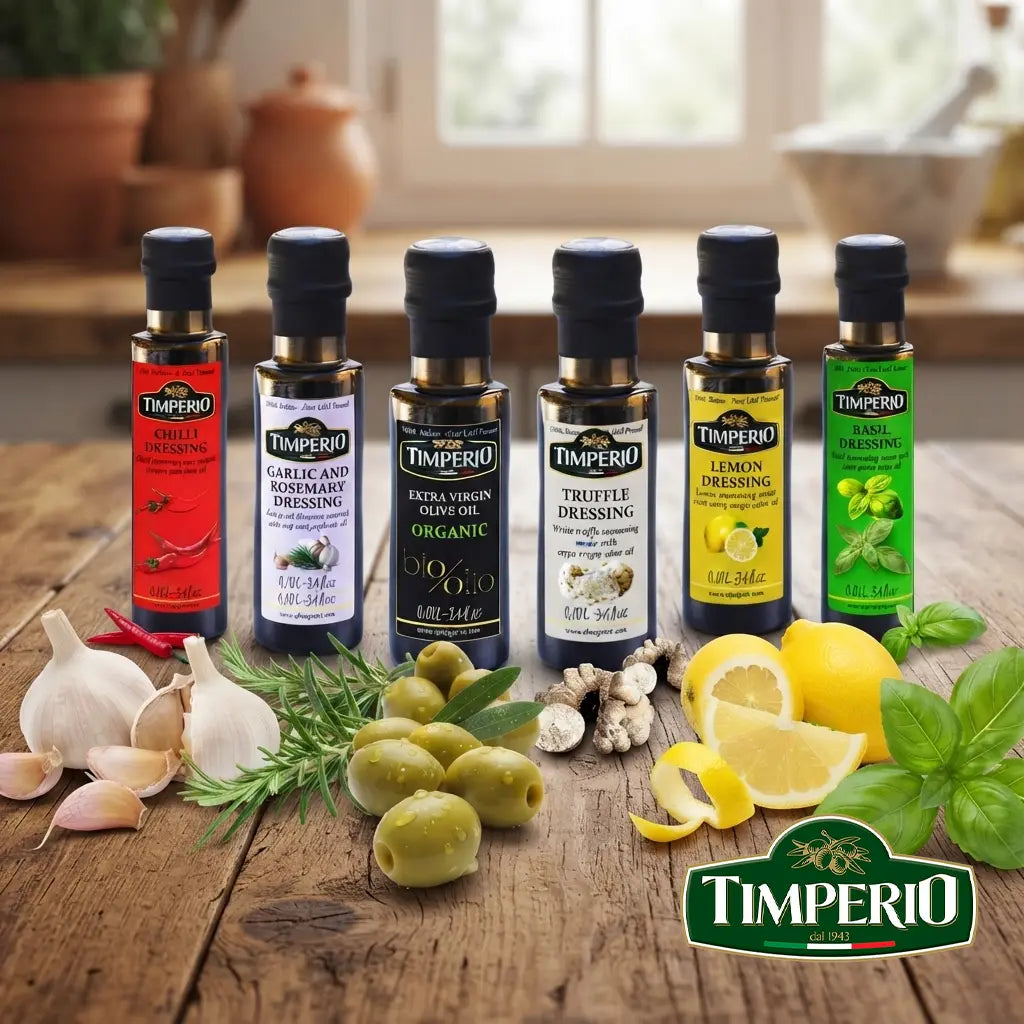
- Timperio Flavoured Oil Collection

In Molise, our family has been making this liquid gold since 1943. Have a bottle at home you're unsure about? Run it through the checklist above, and if you're ready to switch to an oil you can actually trust, browse our full EVOO collection here.